Questions families ask us.
Direct answers with their sources. Reviewed September 22, 2026 for 2027 coverage.
Eligibility.
Who qualifies for the special ACA protections for American Indians and Alaska Natives?
Enrolled members of federally recognized tribes and Alaska Native Claims Settlement Act (ANCSA) corporation shareholders qualify for the Marketplace protections: zero or limited cost-sharing and a monthly Special Enrollment Period. People of Indian descent and others who are eligible for IHS, tribal, or urban Indian health services, but are not enrolled members, do not get those Marketplace protections. They can still qualify for special Medicaid and CHIP protections, and anyone in the family can apply for regular Marketplace savings based on income.
Sources. healthcare.gov, cms.gov
What documents do I need to prove tribal membership?
A document from your federally recognized tribe showing membership, such as a tribal enrollment card with a tribal seal or official signature, usually works. HealthCare.gov also lists a document from an Alaska Native village, tribe, or ANCSA corporation showing shareholder status, a Certificate of Degree of Indian Blood (CDIB) issued by the Bureau of Indian Affairs, a tribal census document, and other documents showing tribal affiliation. If HealthCare.gov asks for proof, you have 90 days after your eligibility notice to upload or mail it. We help you work out which one applies to you and submit it correctly.
Sources. cms.gov, healthcare.gov
I belong to a state-recognized tribe. Do I qualify?
Membership in a state-recognized tribe alone does not qualify you for the Marketplace cost-sharing protections or the monthly enrollment period; those apply to members of federally recognized tribes and ANCSA shareholders. You may still qualify for the Medicaid and CHIP protections if you are eligible for IHS, tribal, or urban Indian health services, and you can still get regular Marketplace savings based on your income. The Bureau of Indian Affairs keeps the official directory of federally recognized tribes.
Do my spouse and children qualify if they are not tribal members?
Family members who are not enrolled members do not receive the tribal cost-sharing protections themselves, but they can use the monthly enrollment period to change plans at the same time as the tribal member on their application. To keep your protections, tribal members need to be on a separate policy from non-member family members. Everyone in the household can still qualify for premium tax credits and regular cost-sharing reductions based on income. Children who are enrolled members get the protections in their own right.
My household includes both AI/AN and non-AI/AN members. Can we enroll together?
Yes, as long as everyone applies on the same Marketplace application. When one person on that application is an enrolled tribal member or ANCSA shareholder, the others can use the same enrollment period, and federal rules let them change plans once a month at the same time the member does. The difference is on the cost side: to keep zero or limited cost-sharing, the tribal member needs to be on a separate policy from the non-member family members, so one application often produces two policies. We set that up for you.
Sources. ecfr.gov, healthcare.gov, cms.gov
Does it matter where I live, on or off tribal land, in Texas or Oklahoma?
No. Your Marketplace protections come with your enrollment in a federally recognized tribe, not your address. Texas and Oklahoma residents both apply through HealthCare.gov. What does change by location is which plans, doctors, and hospitals are available, because insurance companies offer different plans and networks county by county. That is why we look at the actual plans offered in your ZIP code before recommending anything.
Sources. healthcare.gov, cms.gov
Costs.
What is a zero cost-sharing plan?
A zero cost-sharing plan means you pay no deductibles, copays, or coinsurance for covered care, whether you get it from an Indian health care provider or from your plan's providers, and you do not need an I/T/U referral. It is available to enrolled tribal members and ANCSA shareholders with household income between 100% and 300% of the federal poverty level who qualify for premium tax credits. For 2027 coverage, 300% is $47,880 for one person or $99,000 for a family of four. You must agree to income verification.
Sources. healthcare.gov, aspe.hhs.gov, healthcare.gov
What is a limited cost-sharing plan?
A limited cost-sharing plan means you pay no deductibles, copays, or coinsurance for care from an Indian health care provider (IHS, a tribal program, or an urban Indian program) or for care you get elsewhere with a referral from one. It is available to enrolled tribal members and ANCSA shareholders at any income, and no income verification is needed. Care from other providers without an I/T/U referral follows the plan's normal deductibles and copays, so it is worth knowing how referrals work at your clinic.
Sources. healthcare.gov, cms.gov
Does zero cost-sharing mean my health insurance is free?
Not necessarily. Zero cost-sharing removes deductibles, copays, and coinsurance, but it does not remove the monthly premium. Many families qualify for premium tax credits that lower the premium, and for some the credit covers the whole premium on certain plans, depending on income, household size, age, location, and the plan chosen. Some tribes and tribal organizations also help pay premiums for members. We show you the actual monthly premium for each plan before you decide.
Which metal level should I choose: bronze, silver, gold, or platinum?
You can get zero or limited cost-sharing on a bronze, silver, gold, or platinum plan, but not on a catastrophic plan. Because zero cost-sharing removes deductibles and copays at any metal level, many members compare lower-premium plans that still include their doctors, hospitals, and prescriptions. Premium tax credits can be used on any metal level. For most families, the network and drug list matter more than the metal label, so we compare those side by side with you.
Sources. cms.gov, healthcare.gov
What if my income is above 300% of the federal poverty level?
You can still enroll in a limited cost-sharing plan, which means no out-of-pocket costs at Indian health care providers or with their referral, at any income. For other care, the plan's regular deductibles and copays apply. Between 300% and 400% of the poverty level you may still get a premium tax credit. For 2027, credits generally stop above 400% ($63,840 for one person, $132,000 for a family of four) because the enhanced credits expired after 2025 and, as of September 2026, have not been renewed.
Sources. healthcare.gov, irs.gov, aspe.hhs.gov
What if my income is below 100% of the federal poverty level?
It depends on your state. In Oklahoma, adults 19 to 64 with income up to 138% of the poverty level may qualify for SoonerCare, and tribal members eligible for I/T/U services pay no Medicaid premiums. Texas has not expanded Medicaid, so many adults under 100% qualify for neither Medicaid nor Marketplace premium tax credits. Tribal members in that situation can still enroll in a limited cost-sharing plan, but without a tax credit the full premium applies. We will walk through every option with you.
Sources. oklahoma.gov, healthcare.gov, healthcare.gov
Do tribal per capita payments count as income?
It depends on the program and the source of the payment. For Medicaid and CHIP, per capita payments from natural resources, leases, or royalties, income from trust land, and money from selling culturally significant items like beadwork are not counted, but per capita payments from tribal gaming are counted. For Marketplace premium tax credits, income generally follows federal tax rules, so taxable payments such as gaming per capita usually count. Estimate carefully, because extra advance credits must now be fully repaid at tax time.
Sources. cms.gov, healthcare.gov, congress.gov
Do I have to report all of my income?
No. The Marketplace application asks about income the IRS taxes, so American Indian and Alaska Native income that the IRS exempts from tax, such as income from treaty fishing rights, is not reported there. Separately, most Indian trust income and resources are not counted when Medicaid and CHIP eligibility is decided, although some of that same income still counts toward the figure used for premium tax credits. Taxable payments, including gaming per capita, count for both. Because the rules differ by program, we go through your income sources with you one at a time.
Sources. healthcare.gov, healthcare.gov, cms.gov
Enrollment timing.
Can tribal members enroll in Marketplace coverage any time of year?
Yes. Enrolled members of federally recognized tribes and ANCSA shareholders have a Special Enrollment Period that lets them enroll in a Marketplace plan or change plans once a month, all year. It remains in federal regulations for 2026 and 2027; the 2025 federal changes ended a different, income-based monthly enrollment period, not this one. Coverage generally starts the first day of the month after you pick a plan, so you can apply today and be covered as soon as the first of next month.
Sources. ecfr.gov, healthcare.gov, cms.gov
How often can I change plans, and when does the new plan start?
You can enroll or switch Marketplace plans one time per month. The new plan generally begins the first day of the following month, so a plan picked on March 20 usually starts April 1. Switching plans mid-year can start your deductible and out-of-pocket totals over with the new insurer. That matters little on a zero cost-sharing plan but can matter a lot on a limited cost-sharing plan, so we check before you switch.
Sources. ecfr.gov, healthcare.gov
Do tribal members still need to pay attention to Open Enrollment?
Yes, it is still the best time to review your coverage. Open Enrollment for 2027 on HealthCare.gov runs November 1, 2026 through January 15, 2027; pick a plan by December 15 for coverage that starts January 1. Plans, premiums, networks, and drug lists change every year, and your income estimate and tax credit are updated for the new year. If you do nothing, you may be automatically renewed into a plan that no longer fits your family.
Sources. cms.gov, healthcare.gov
What changed for 2027 that tribal members should know about?
Your core protections have not changed: zero and limited cost-sharing and the monthly enrollment period remain in place. Changes that affect everyone include the end of the enhanced premium tax credits after 2025, so most households pay a larger share of the premium and credits generally stop above 400% of the poverty level; full repayment of any extra advance credits starting with 2026 taxes; and a higher 2027 out-of-pocket limit of $12,000 for one person. Some federal rule changes are still being decided in court.
Sources. irs.gov, congress.gov, cms.gov, cms.gov
IHS and your plan.
Can I keep using IHS or my tribal clinic if I enroll in a Marketplace plan?
Yes. Enrolling in a Marketplace plan does not change your eligibility for IHS, tribal, or urban Indian health services. You can keep going to your clinic, and the clinic can bill your plan for the care it provides. Those payments stay with the clinic and help fund more services for your whole community. As an enrolled tribal member, you pay no deductibles, copays, or coinsurance for care from an Indian health care provider.
Sources. healthcare.gov, cms.gov
Isn't IHS already my health insurance?
No. The Indian Health Service says it is not an insurance program and not an entitlement like Medicare or Medicaid. IHS and tribal programs provide care, but they depend on yearly funding from Congress, which IHS estimates covers about 60% of the health care needs of the people it serves. Care IHS cannot provide in its own facilities depends on Purchased/Referred Care funds and rules. A Marketplace plan or Medicaid adds coverage for care outside the IHS system.
Will a Marketplace plan let me see any doctor or hospital?
No plan covers every doctor or hospital. Each Marketplace plan has its own network, and many are HMOs or EPOs that do not cover non-emergency care outside that network. A plan can widen your options well beyond the tribal clinic, but you should confirm your doctors, specialists, hospitals, and pharmacies are in-network before you enroll. Emergency care is covered whether or not the hospital is in your network. We check networks with you, plan by plan.
Sources. healthcare.gov, healthcare.gov
Do I need a referral from IHS or my tribal clinic to see other doctors?
It depends on which plan you have. With a zero cost-sharing plan, you do not need an I/T/U referral to avoid deductibles, copays, or coinsurance for covered services. With a limited cost-sharing plan, you need a referral from an Indian health care provider for outside care to avoid those costs. Separately, some HMO plans require a referral from your primary care doctor before you see a specialist; that is a plan rule, not an IHS rule.
Sources. healthcare.gov, healthcare.gov, healthcare.gov
What if I already have coverage through work or IHS, do I still need a Marketplace plan?
Not always, and we will tell you honestly when what you have is already the better deal. IHS, tribal, and urban Indian programs provide care rather than insurance, so a Marketplace plan or Medicaid sits alongside them and covers care outside that system; it does not replace your clinic. Job-based coverage is a different calculation, because an employer offer that counts as affordable under federal rules generally blocks the premium tax credit, and zero cost-sharing requires being eligible for that credit. We compare the real numbers before you change anything.
Sources. ihs.gov, irs.gov, healthcare.gov
Do I still need a tribal exemption from the health coverage penalty?
No. The federal penalty for not having health coverage has been $0 since 2019, so there is no federal fee to be exempt from, and neither Texas nor Oklahoma has its own coverage penalty. Coverage is still worth having: IHS funding cannot cover every need, and a serious illness or accident treated outside the IHS system can be very expensive without insurance.
Sources. healthcare.gov, ihs.gov
Medicaid.
What special Medicaid and CHIP protections do American Indians and Alaska Natives have?
If you are eligible for services from IHS, a tribal program, or an urban Indian program, you do not pay Medicaid premiums or enrollment fees, and if you have received care from one of those providers, you pay no Medicaid copays, coinsurance, or deductibles. Children in CHIP have no out-of-pocket costs. Certain Indian income and resources are not counted for eligibility, and you can apply any time of year. These protections reach beyond enrolled members to others eligible for I/T/U services.
Sources. healthcare.gov, cms.gov, healthcare.gov
Can Medicaid take my trust land or tribal property after I pass away?
Federal rules protect many Indian assets from Medicaid estate recovery. Interests in and income from tribal land and other resources held in trust, along with certain judgment funds, are exempt. Estate recovery generally applies only to people 55 and older who received long-term care services such as nursing home care. Because every family's property situation is different, talk with your state Medicaid agency or your tribe's benefits coordinator about specific assets before making decisions.
Will the new Medicaid work requirements affect tribal members?
Most tribal members are exempt. A federal law passed in 2025 requires states to apply work or community engagement requirements to many Medicaid expansion adults beginning no later than January 2027, with some states allowed more time, but it exempts Indians, Urban Indians, and others eligible for IHS, tribal, or urban Indian services. This matters most in Oklahoma, which covers expansion adults; Texas has not expanded Medicaid. Watch for SoonerCare notices and respond quickly so your coverage is not interrupted.
Sources. congress.gov, oklahoma.gov
Working with RedHealth.
Does it cost anything to work with RedHealth Advisors?
No. Our help is free to you and your family, from the first eligibility check through enrollment, document uploads, and renewals. Insurance companies pay licensed agents and brokers like us a commission when you enroll, and HealthCare.gov confirms you pay nothing additional by enrolling with an agent or broker. The premium for a Marketplace plan is the same whether you enroll with us, on your own, or with a navigator.
Source. healthcare.gov
Who is RedHealth Advisors?
RedHealth Advisors is a licensed Texas health insurance agency serving Texas and Oklahoma, co-founded by Mike Grimes, a citizen of the Chickasaw Nation, and Ryan Hutson. We focus on helping enrolled tribal members and their families use the protections federal law already gives them: comparing Marketplace plans, enrolling through HealthCare.gov, and working alongside IHS, tribal, and urban Indian health programs rather than in place of them. Your enrollment is handled by Ryan Hutson, a licensed agent (NPN 21321807). You can verify his license with the Texas Department of Insurance or the national NIPR lookup, and our licensing page lists every license number.
Sources. tdi.texas.gov, nipr.com
What should I have ready before we talk?
It helps to have your tribal enrollment card or other membership document, Social Security numbers for everyone applying, an estimate of your household's 2027 income, details on any job-based coverage offered to anyone in your household, and a list of your doctors, clinics, and prescriptions. If you already have a Marketplace plan, your HealthCare.gov login or latest eligibility notice helps too. We walk through the application and paperwork with you.
Sources. healthcare.gov, cms.gov
See what your household qualifies for.
A few taps, an early read on your protections, then a licensed advisor follows up with plans for your ZIP code.
- Free, with no obligation, ever.
- Help gathering and submitting tribal documents.
- Your clinic stays. We build the plan around it.

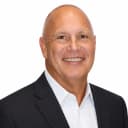
Co-founders, RedHealth Advisors